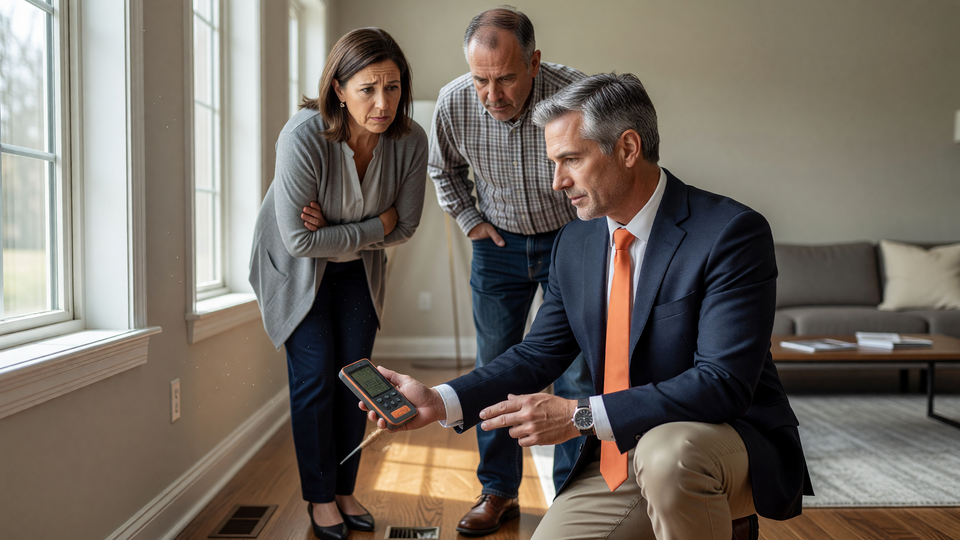
A standard short-term radon test runs a minimum of 48 hours under EPA closed-building conditions. Radon Eliminator's Ohio testing follows this EPA-aligned protocol: the device is placed on the lowest lived-in level of the home and left undisturbed for at least two full days while doors and windows stay closed.
What does "closed-building conditions" actually mean?
EPA short-term test protocol calls for closing windows and exterior doors at least 12 hours before the test starts, and keeping them closed for the full test period (normal entry and exit is fine). Heating and cooling systems should run normally; for tests under a week, only air-conditioning units that recirculate interior air should be used, since fresh-air intake can dilute the reading and produce a falsely low result. Following this protocol matters — a test run with windows open, or right after a period of unusually heavy ventilation, won't reflect the home's typical radon level.

Why 48 hours and not less?
Radon levels fluctuate hour to hour and day to day with barometric pressure, wind, and how tightly the building is sealed at any given moment. A 48-hour minimum gives the device enough time to average out that short-term noise and produce a number that's actually representative of the space, rather than a snapshot of one unusually high or low hour.
Where in the home does the test go?
EPA guidance places the initial test on the lowest lived-in level of the home — a finished basement counts if it's regularly occupied, a crawlspace or unfinished basement used only for storage does not. This is also the level radon is most likely to be elevated at, since it's closest to the soil gas source.
Short-term vs. long-term testing
A short-term test (48 hours to about 90 days) is the right choice when you need a result quickly — a real estate transaction deadline, for example — but because radon varies seasonally, it's a snapshot rather than a year-round average. A long-term test (more than 90 days) gives a more accurate picture of typical year-round exposure but obviously isn't practical when a decision is needed fast. Most Ohio real estate transactions and initial homeowner screenings use the short-term protocol for exactly that reason.
What happens after the 48 hours are up?
The device is collected and the reading is processed. If the result comes back at or above the EPA's 4.0 pCi/L action level, mitigation is recommended — see our radon mitigation systems page for how that works. If it's below 4.0 pCi/L, no action is required, though EPA notes there's no fully "safe" level of radon exposure, so homeowners in the 2-4 pCi/L range sometimes choose to mitigate anyway for extra margin.
What can throw off a 48-hour test result
A handful of conditions can produce an unreliable reading if they aren't controlled for. Unusually high winds or storms during the test window can temporarily depressurize a home and pull in more soil gas than normal, skewing the number upward. Opening windows partway through — even briefly to air out cooking smells — resets the closed-building clock and can pull the reading down artificially. Placing the device too close to an exterior door, a drafty window, or directly in an HVAC air stream can also distort results. EPA guidance is specific about placement (at least 20 inches off the floor, away from drafts, exterior walls, and heat sources) for exactly this reason.
Retesting after mitigation
If a home has already had a mitigation system installed, a follow-up short-term test — same 48-hour, closed-building protocol — confirms the system is actually working as intended. This is standard practice after any new install and is also often required by lenders or buyers in a real estate transaction where mitigation was part of the negotiated repairs.
Why the 48-hour minimum exists in the first place
It's a balance between accuracy and practicality. A test run for only a few hours would be too easily skewed by a single gust of wind, a door left open, or an HVAC cycle — not long enough to smooth out normal short-term variation. A test run for weeks would be far more accurate but impractical for time-sensitive situations like a home sale. The EPA settled on 48 hours as the minimum that reliably averages out day-to-day noise while still fitting inside a realistic scheduling window, which is why it's the standard used across the industry, including by Radon Eliminator's own testing process in Ohio.
How testing timing fits into a real estate transaction
Radon testing during a home purchase is typically done within whatever inspection contingency window is negotiated into the purchase contract — the exact number of days varies by contract, but it's set well before closing specifically to allow time for inspections and any resulting negotiation. Because the test itself needs a minimum of 48 hours, buyers who wait until the final days of that window to request a radon test risk running out of time to also negotiate or complete mitigation before closing if the result comes back elevated. Placing the test order early in the inspection period, even alongside a general home inspection, avoids that scheduling squeeze. Ask your agent or a real estate attorney for the specific contingency deadline in your contract — it isn't standardized statewide.
DIY test kits vs. a placed device
Retail short-term test kits follow the same 48-hour, closed-building EPA protocol, but the sample is typically mailed to a lab for analysis after the exposure period, adding several days to the total timeline before a result is in hand. A professionally placed continuous radon monitor gives a same-day readout the moment the 48-hour period ends, without a mail and lab-processing delay — a meaningful difference when a transaction deadline is close.
What the test actually measures during those 48 hours
A continuous radon monitor logs readings at regular intervals throughout the full test period rather than producing a single averaged number with no detail behind it. That interval-level data is useful beyond just the final average: it can reveal whether the reading was consistently elevated throughout the test or spiked during a specific window (say, overnight when the house was sealed tightest), which can help a technician understand what's driving the number before recommending a mitigation approach. Passive lab-analyzed kits (charcoal canisters or alpha-track detectors) typically report only the final averaged result, without that interval detail.
Chain-of-custody matters for real estate tests
When a radon test is part of a real estate transaction, the testing professional (not the buyer, seller, or agent) should place and retrieve the device, to keep the chain of custody clean and the result credible to all parties, including any lender involved. A test placed or retrieved by an interested party is a common point of dispute in radon-contingent transactions, which is one reason professionally administered tests remain the norm for real estate purposes even though consumer kits are widely available.
Key takeaways on radon test duration
- A standard radon test takes a minimum of 48 hours under EPA closed-building conditions.
- A short-term radon test (48 hours to 90 days) gives a fast snapshot; a long-term radon test (90+ days) reflects year-round average exposure better.
- An accurate radon test requires closed windows and doors starting at least 12 hours before the test begins.
- A follow-up radon test after mitigation confirms the new system is actually working.
Ready to schedule an EPA-aligned 48-hour test in Ohio? See our full radon testing guide, our mitigation systems overview if you're testing after an install, or call Radon Eliminator at 216-480-9580.